

Green Burial vs. Living Memorial Trees: Understanding Eco-Friendly Memorial Options
Green burial and living memorial trees offer different ways for families to reduce the environmental impact associated with conventional memorial practices. A green burial generally refers to burying a loved one’s body using natural burial practices. At the same time, a living memorial tree can be created following cremation by planting cremated remains with a tree using a system designed for that purpose.

Neither choice is inherently right for each family. Factors such as the loved one’s wishes, access to facilities, local regulations, and whether a family wants to maintain a memorial all factor into the final decision. Let’s explore green burials and natural memorial options for families that choose cremation.
What Is A Green Burial?
Natural burial, as defined by The Green Burial Council, is when an unembalmed body is placed directly into the earth without conventional vaults or liners. Any materials involved are biodegradable. The Green Burial Council specifically distinguishes whole-body green burial from alternatives involving “reduced remains,” such as cremated remains, thereby excluding methods such as mushroom suit burial from being classified as a fully “Green Burial.”
In contrast, a conventional burial involves processes such as embalming, which uses toxic chemicals, metal or hardwood caskets, concrete burial vaults or liners, and a highly landscaped cemetery.
Green burials aim to reduce the carbon footprint of traditional burial by conserving natural resources, lowering carbon emissions, and protecting or restoring natural habitats.
The Green Burial Council identifies three major types of green cemeteries:
- Hybrid cemeteries combine traditional burial with natural burial options
- Natural burial grounds are dedicated to natural burial and green land management practices.
- Conservation burial grounds are natural burial lands protected through conservation measures, such as easements or deed restrictions.
Embalming isn’t always required by law, and families are encouraged to do their own research into the green and natural burial options in their local area.
What Are Green Burial Alternatives?
While the definition of a green burial is strict, there are a variety of green burial alternatives that, though they don’t meet the Green Burial Council's guidelines, still offer significant environmental benefits over a traditional burial. One such option is cremation, which allows for many different memorial choices, such as:
- Planting cremated remains with a memorial tree.
- Burying cremated remains in a biodegradable urn.
- Scattering cremated remains using a reusable or biodegradable scattering urn.
- Using a biodegradable water urn for a water memorial.
These options provide greater flexibility for families who prefer cremation but still want nature to play an important role in remembrance. Additionally, your memorial can be further personalized through the location, tree or plant species, type of ceremony, and whether the family wants a physical place to revisit.
How Living Memorial Trees Compare To Traditional Green Burial
Traditional green burial returns the body to the earth with minimal intervention, while a memorial tree created after cremation incorporates cremated remains into a living tribute. A living memorial tree requires cremation, while in green burial, the whole body is laid to rest. A green burial typically takes place at a natural burial ground. In contrast, a memorial tree can be planted on private property, public lands (with permission), some cemeteries, or in a memory forest.
The Living Urn® BioUrn® and planting system is specifically designed to plant a tree, plant, or flowers with cremated remains. The system uses a biodegradable BioUrn® and proprietary RootProtect® soil additive. The BioUrn® does not begin biodegrading while it is being stored; biodegradation begins after it is buried with a young tree or other plant. Families can purchase a tree with the planting system, or select the BioUrn® system on its own.
Environmental Benefits Of Green Burial Alternatives
The environmental benefits of green burial alternatives vary depending on the memorial option chosen, its materials, transportation requirements, land use, and long-term maintenance. Biodegradable urns offer an alternative to permanent metal or plastic urns when the family’s goal is to return cremated remains to the earth. Tree memorials create a living memorial rather than relying solely on a conventional monument. Selecting a tree that grows well in your region allows it to become a natural part of the landscape while providing a physical place to gather in remembrance.
Other ways to embrace an environmentally conscious memorial include planting native species and using natural products while maintaining any living memorials. Environmentally conscious memorial planning is less about finding one universally correct option and more about making an informed choice that aligns with the family's priorities.
Explore Green Burial Alternatives From The Living Urn
The Living Urn® provides several options for families who choose cremation but want environmentally conscious memorials.
-
The Living Urn® BioUrn® and Planting System allows families to grow a living memorial, either with a tree or plant from The Living Urn, or from a local nursery.
-
Eco Burial BioUrn® safely holds cremation remains and breaks down over time after being buried.
-
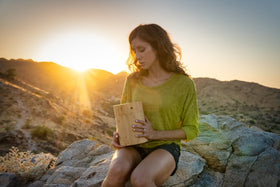
Eco Scattering Urns are handmade from bamboo and specifically designed for ash scattering or display.
-
Eco Water Urns are made out of biodegradable materials and are designed for water burials.
- Memory Forests™ are like cemeteries for memorial trees; they are tranquil, garden-like places where memorial trees are planted and cared for together.
With The Living Urn®, families can select the memorial that best reflects their loved one’s wishes, their environmental priorities, and the type of remembrance they want to create.